
Article: Ning Yuan: Texture, Silence & the Wabi-Sabi Canvas
Ning Yuan: Texture, Silence & the Wabi-Sabi Canvas
Ning Yuan: Texture, Silence & the Wabi-Sabi Canvas
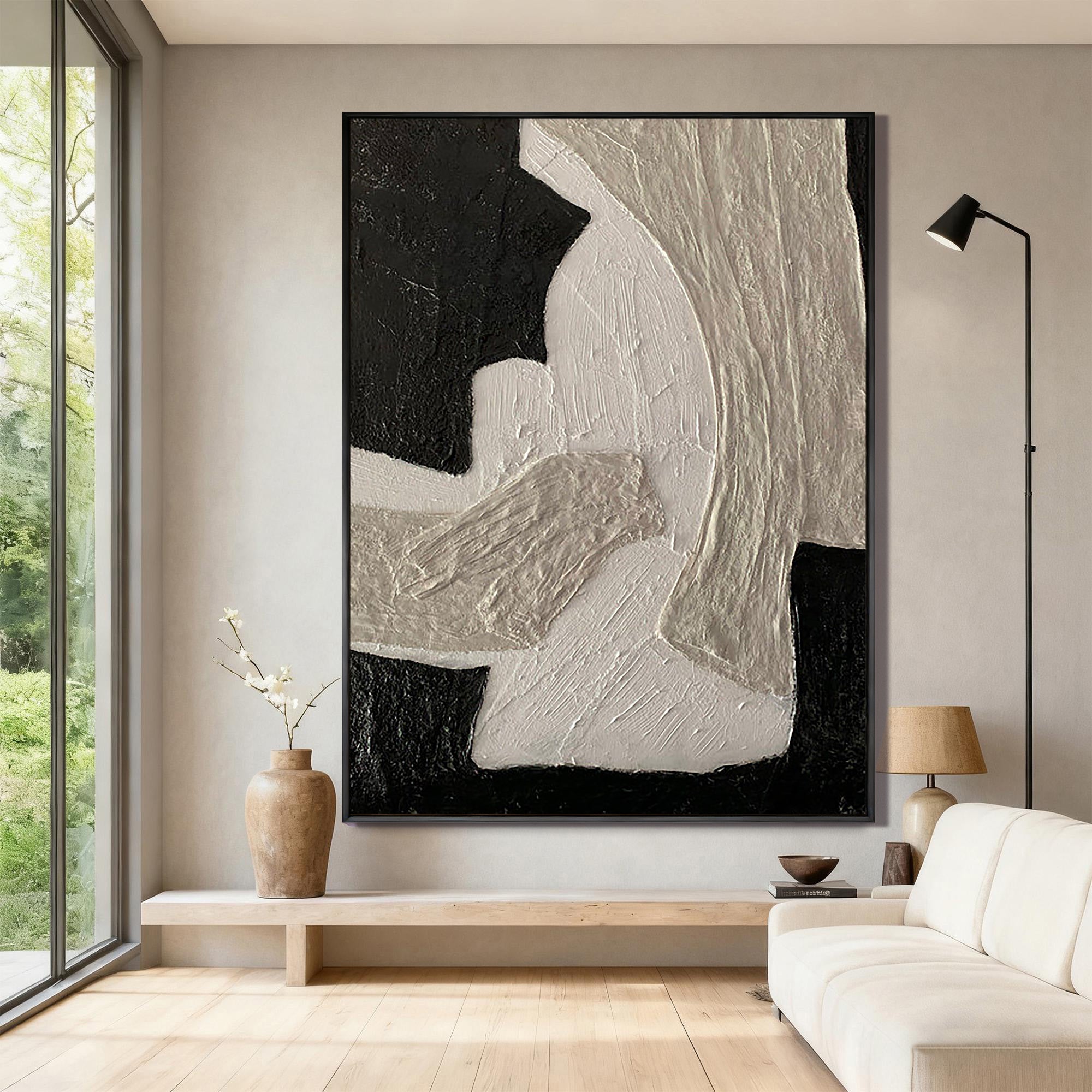
Some paintings ask to be looked at. Ning Yuan's ask to be touched. The surface of a Ning Yuan canvas is genuinely three-dimensional — ridges and plateaus of built-up oil paint that cast real shadows, shift with the light, and give the piece a physical presence that photography never quite captures.
Ning Yuan is the artist most responsible for Zeydrt's reputation in the wabi-sabi and Japandi market. Here's what defines his work, and why it looks different every time the light in a room changes.
| 01. The Philosophy: Imperfection as Intention
Wabi-sabi — the Japanese aesthetic of finding beauty in imperfection, transience, and incompleteness — is not a visual style so much as a way of seeing. Ning Yuan doesn't apply it as a formula. It shows up in the choices he makes: the roughness of a surface left intentionally unsmoothed, the slightly irregular edge of a palette-knife stroke, the color that almost matches but doesn't quite.
These aren't mistakes. They're what makes the work feel honest rather than manufactured.
| 02. The Technique: Building Topography
Ning Yuan works primarily with a palette knife rather than a brush, loading it with thick oil paint and dragging, pressing, and flicking it across the canvas to build up what amounts to a small landscape of paint. The result is impasto at its most deliberate — not gestural energy but considered construction, layer by layer, until the surface has the weight and depth he's after.
Because impasto paint is applied thickly, it takes significantly longer to cure than a standard oil painting. Ning Yuan's pieces are fully cured before they ship — the surface is robust, but should be dusted gently rather than wiped.
| 03. The Palette: Earth, Stone & Quiet
Ning Yuan's color range is narrow by design. He works in greys, creams, warm whites, sand, rust, slate, and the occasional deep green or brown — the palette of weathered stone, dry earth, and aged wood. These are not exciting colors in isolation. Together, in the hands of someone who understands value and texture, they produce paintings that feel ancient and completely contemporary at the same time.
| 04. Why the Light Matters
A Ning Yuan painting is not the same painting in the morning as it is in the evening. Because the surface has genuine topography, directional light — from a window, a picture light, or an angled ceiling spot — rakes across the ridges and creates shadows that shift as the light source moves. A flat wall-mounted light that illuminates the canvas head-on loses most of this effect. Angled light, even at a gentle angle, brings the surface to life.
| 05. Where His Work Belongs
- Minimalist and Japandi interiors — the restraint of the palette and the tactility of the surface are exactly what these spaces call for
- Modern organic rooms — natural materials, linen, stone, raw wood are natural partners
- Living rooms and bedrooms — the quietness of the work makes it easy to live with long-term
| Frequently Asked Questions
What is wabi-sabi art?
Wabi-sabi is a Japanese aesthetic philosophy centered on finding beauty in imperfection, transience, and incompleteness. In painting, it tends to express itself through earthy, restrained palettes, organic textures, and surfaces that feel handmade rather than polished.
How is Ning Yuan's texture created?
Ning Yuan builds his surfaces using a palette knife, pressing and layering thick oil paint to create genuine three-dimensional relief. The technique is called impasto, and the resulting ridges and peaks cast real shadows as light moves across the canvas.
What interiors suit Ning Yuan's paintings?
His work is best suited to minimalist, Japandi, and modern organic interiors — spaces with natural materials, restrained palettes, and an appreciation for quiet, tactile surfaces.
See all Zeydrt artists in our studio overview, explore Ning Yuan's full collection, or browse all wabi-sabi art and textured paintings.


Leave a comment
This site is protected by hCaptcha and the hCaptcha Privacy Policy and Terms of Service apply.